



Apple Pay TrustPath
2026

TrustPath

An adaptive provisioning trust framework for , making friction proportional to risk.

My Role
Product Strategy, Technical Product Thinking & Launch Execution
Project Timeline
June 2026
Project Stack
Claude
Notion
Cursor
Jupyter Notebook
Python
Excel

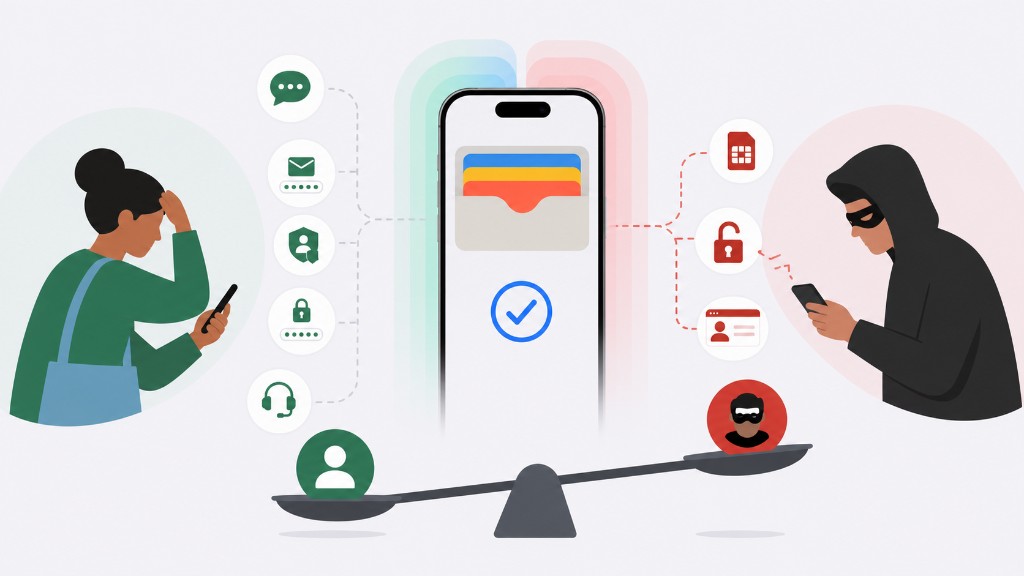
Apple Pay currently establishes trust through verification channels instead of trust signals, creating a system that is simultaneously too difficult for legitimate users and too weak against sophisticated fraud.

Apple Pay trust balance between legitimate users and fraud risk
00A Note on This Project

This project was built as a structured product strategy exercise targeting the Apple Pay PM role. The problem framing, provisioning system architecture, stakeholder analysis, goals framework, and ML decisioning structure are grounded in Apple's documented ecosystem, public payment standards, and real data sources including Federal Reserve payment surveys and CFPB complaint data.

Several sections, concept ideation, Pugh matrix scoring, preference testing, and the technical build plan, are structured as this is how I would approach this stage rather than executed deliverables. These sections are labeled. Where the work is directional, it reflects genuine product process thinking applied to a real problem, not a hypothetical exercise.

The goal is to show how I think, how I structure ambiguity, and how I would operate in this role from day one.
01
Phase One

Discovery

What is the problem? Why does it matter? Who is affected?

01What is the Problem?

provisioning is fundamentally a trust-establishment problem that is often solved through verification mechanisms.

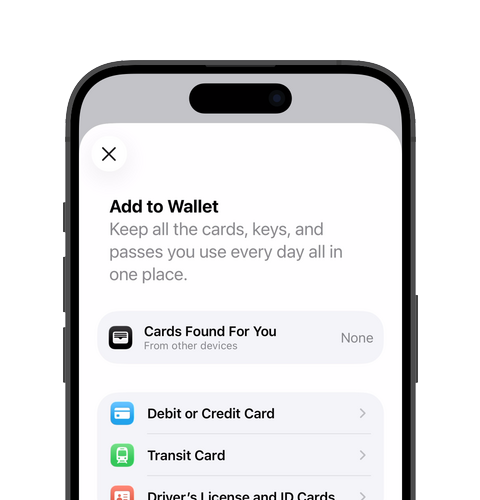
Add to Wallet screen
Common verification channels
  • -SMS OTP
  • -Email verification
  • -Issuer app authentication
  • -Call-center assisted verification
The gap

These methods verify access to a channel. They do not always prove that the user, device, and cardholder relationship should be trusted.

The Provisioning Tension

Legitimate users face
  • Delayed SMS codesDelayed SMS code illustration
  • Forgotten issuer credentialsForgotten credentials illustration
  • App switching mid-setupApp switching mid-setup illustration
  • Confusing error statesConfusing error state illustration
  • Call-center waitsCall center wait illustration
Fraudsters exploit
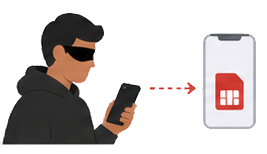
  • SIM swappingSIM swapping fraud illustration
  • Account takeoverAccount takeover fraud illustration
  • Stolen credentialsStolen credentials fraud illustration
  • Synthetic identitySynthetic identity fraud illustration
  • Social engineeringSocial engineering fraud illustration

The result: a provisioning system that can become too difficult for legitimate users and still too weak against sophisticated fraud.

03Why This Matters

Four Business Outcomes

01 / adoption

Activation gateway

Every failed provisioning attempt is a user who intended to use but did not successfully activate it.

02 / Transaction volume

Downstream revenue

Provisioned cards create future payment volume. Failed provisioning reduces downstream engagement across the ecosystem.

03 / Issuer trust

Partner confidence

Issuers need confidence that provisioning reduces risk rather than increasing fraud exposure or operating burden.

04 / Brand trust

First moment of use

promises privacy, security, and simplicity. Provisioning friction undermines that promise at the first use moment.

04Current State

The Provisioning Flow

User DeviceApple ServersCard Network / TSPIssuer1. Taps Add CardPAN, expiry, CVV, name2. Sends card dataDevice + Apple Account signals3. Risk assessmentApple + network + issuer signals4. Color path decision returned5. Path result6a. GREEN: Card added instantlyToken generated,DPAN provisioned toSecure Element6b. YELLOW: Step-up requiredSMS OTP / email / call center / app-to-app6c. ORANGE: Enhanced verificationCall center mandatory, CVV re-entry,cannot use in-app verification6d. RED: Declined
The biggest tension sits in the middle. Medium-confidence attempts fall into channel-based step-up flows where friction and fraud collide.
05Core Product Insight
The wrong question

Did the user complete a verification challenge?

Successful verification screen
Uncertain verification screen
The right question

Do we have enough trusted evidence to allow this device to represent this credential?

This reframes provisioning from a verification problem into a trust decisioning problem.
06Stakeholders

Multi-Sided Ecosystem

Credit card being added to phone
Users

The person adding a card

Want instant setup, clarity, and confidence. They should not be punished because the system cannot distinguish them from fraudsters.

Apple

Platform owner

Owns the Wallet experience, device security, privacy model, and ecosystem trust. Apple is uniquely positioned to solve this.

Issuers

Banks and card issuers

Own cardholder relationships, risk appetite, fraud liability, and approval decisions.

Networks / TSPs

Tokenization rails

Operate token lifecycle management and see patterns across the ecosystem that a single issuer cannot.

Fraud and Ops

Risk teams

Need better signals, fewer false positives, and lower manual review burden.

Legal and Privacy

Compliance

Ensure identity verification remains consented, minimal, explainable, and compliant across regions.

07User Research MethodsSTRUCTURED APPROACH · NOT YET EXECUTED

How We Researched the Problem

Method 1

User Interviews

Recruited users who had successfully added cards, failed to add cards, completed SMS verification, used issuer app verification, called issuer support, or experienced suspected fraud. Goal: understand where friction occurs and which failure states users attribute to Apple vs. their bank.

Method 2

Apple Support Community Mining

Searched for patterns around: cannot add card, card not added, Apple Pay verification, Wallet verification failed, call bank to verify Apple Pay, and Apple Pay card declined during setup.

Method 3

App Store Review Mining

Analyzed reviews for Wallet and issuer apps mentioning: Apple Pay, verification, add card, fraud, OTP, call bank, and Wallet failure.

Method 4

CFPB Complaint Analysis

Used the public complaint database to classify themes: unauthorized use, digital wallet, verification failure, account takeover, disputes, and customer service.

Method 5

Expert Interviews

Spoke with former payments PMs, fraud analysts, banking operations professionals, compliance experts, and support agents to understand issuer-side decisioning and the operational cost of current verification paths.

08Root Cause AnalysisMY FRAMEWORK

The 5 Whys

Why
Finding
Why do legitimate users face friction and fraudsters still pass?
Provisioning relies on channel-based verification.
Why does it rely on channels?
Issuers need a quick way to establish cardholder confidence.
Why don't issuers have better options?
They lack high-confidence device, identity, and behavioral signals.
Why are those signals missing?
Trust is fragmented across Apple, issuer, network, and device systems.
Why is trust fragmented?
The ecosystem lacks a unified privacy-preserving trust layer for provisioning.

Root cause: Fragmented trust. Apple has device signals, issuers have cardholder signals, networks have token signals, users have identity credentials, but the provisioning decision collapses into a low-quality verification challenge.

False friction

Good user forced through unnecessary verification.

False approval

Fraudster passes weak verification.

False decline

Good user blocked entirely.

Operational escalation

User must call support.

Unclear ownership

User cannot tell if Apple or issuer caused the failure.

02
Phase Two

Definition

Requirements, solution direction, trust dimensions, decision ladder.

09Requirements

What the Product Must Do

Apple Pay provisioning completion visual
  • Reduce unnecessary step-up verification.
  • Preserve issuer control over decisioning.
  • Improve fraud signal quality.
  • Support privacy-preserving identity verification.
  • Gracefully handle users without Wallet identity credentials.
  • Operate within low-latency provisioning constraints.
  • Create measurable improvements in conversion and fraud outcomes.
  • Support issuer-by-issuer rollout.
  • Include experimentation and feedback loops.

The solution cannot simply be “add more verification.” The better answer is adaptive trust.

10Solution Direction

TrustPath

An adaptive provisioning trust framework that combines multiple trust dimensions to recommend the right provisioning path for each attempt.

Inputs / trust dimensions
01
Device Trust
02
Identity Trust
03
Issuer Trust
04
Behavioral Trust
05
Network Trust
=
Output
Provisioning Trust Decision

The right path for this card, device, user, issuer, and risk context.

11Trust Dimensions

Five Signal Categories

Trust Dimension Orbit
Device
01

Device Trust

Device age, tenure, biometric enrollment, Wallet history, prior usage, and trusted device relationships.

Identity
Issuer
Behavioral
Network
12The TrustPath Decision LadderPROPOSED FRAMEWORK

Trust Score to Provisioning Path

Trust Score
Path
User Experience
> 90
Instant Provisioning
Add Card → Face ID → Card added. No step-up.
70-90
Passive Verification
Silent signal check. Minimal friction. Card added with brief confirmation.
50-70
Wallet ID Verification
Verify with your ID in Wallet. Face ID → Wallet attestation → Card added.
30-50
Enhanced Issuer Verification
Issuer-led step-up with richer trust signal package. SMS / issuer app / call center.
< 30
Decline
Clear explanation. Recovery options presented. Issuer contact path surfaced.

Score is computed from composite signals across all 5 trust dimensions. Issuers retain final approval authority. TrustPath provides the signal and recommendation, not the binding decision.

03
Phase Three

Ideation

Five concepts evaluated. One MVP direction selected.

13Who We're Designing For

Segments, Current Friction, and TrustPath Outcomes

Segment 01

Established Apple Pay user

Profile

Long device tenure, existing Wallet cards, biometric enrolled.

Current Experience

Often still routed to SMS OTP.

TrustPath Outcome

Trusted Device Fast Lane: instant provisioning.

Segment 02

First-time Wallet user

Profile

No Wallet history, limited Apple Account signals.

Current Experience

High step-up rate, frequent abandonment.

TrustPath Outcome

Wallet ID step-up: stronger signal, less friction than call center.

Segment 03

Recently changed context

Profile

New phone, new number, recent password change.

Current Experience

Appears risky, legitimate users blocked.

TrustPath Outcome

Safe hold path: short cool-down with clear explanation.

Segment 04

High-risk / unknown

Profile

New Apple ID, high provisioning velocity, mismatched geography.

Current Experience

Correctly challenged but weak verification channels.

TrustPath Outcome

Enhanced issuer verification with richer signal package.

Segment 05

Fraudster

Profile

Stolen PAN, SIM-swapped number, synthetic identity.

Current Experience

Can pass SMS OTP via compromised channel.

TrustPath Outcome

Blocked by device + behavioral signal composite. Channel access alone insufficient.

14Concepts ExploredSIMULATED · MY APPROACH

Seven Directions Evaluated

Concept
Core Idea
Strengths
Weaknesses
A - Wallet ID Step-Up
selected
Use Wallet identity credentials as step-up when issuer confidence is medium.
Strong identity assurance, fast UX, privacy-preserving.
Adoption constraints, regulatory complexity.
B - Issuer App Fast Lane
Route users to issuer app when installed and trusted.
Issuer-controlled, strong existing relationship.
Not all users have app, context switching remains.
C - Device Reputation Layer
selected
Use device tenure, biometric state, Wallet history as primary risk signal.
Apple's unique advantage, low user friction, scalable.
Cold-start problem, insufficient alone.
D - Behavioral Trust Engine
Use behavioral and velocity patterns to adapt verification dynamically.
Dynamic fraud detection, useful for emerging attacks.
Explainability concerns, privacy sensitivity.
E - Issuer Risk Console
Give issuers better analytics and controls for Apple Pay provisioning.
Improves partner trust, operationally valuable.
Less direct user impact, slower UX improvement.
F - Safe Recovery Path
selected
Build a better recovery experience when users fail verification.
Reduces abandonment, easier MVP.
Does not reduce fraud.
G - TrustPath Adaptive Decisioning
Combine all signal types into a unified provisioning trust framework.
Solves root problem, scalable platform.
Complex, requires cross-functional execution.
15Down Selection - Round 1SIMULATED · MY APPROACH

Concept Evaluation

Evaluation Criteria
C1User friction reduction
C2Fraud reduction
C3Privacy alignment
C4Engineering feasibility
C5Issuer adoption feasibility
C6Strategic differentiation
C7Time to market
C8Scalability
C9Explainability
C10Apple ecosystem fit
Scoring scale

+2 strong positive / +1 positive / 0 neutral / -1 negative / -2 strong negative

Concept / CriteriaC1C2C3C4C5C6C7C8C9C10Total
Wallet ID Step-Up
advanced
+2+2+100+20+1+1+211
Issuer App Fast Lane+1+1+1+1+20+10+2+110
Device Reputation Layer
advanced
+2+1+2+1+1+1+1+2+1+214
Behavioral Trust Engine+1+20-10+1-1+2-1+14
Issuer Risk Console0+1+1+1+20+1+1+209
Safe Recovery Path
advanced
+10+2+2+10+2+1+2+112
TrustPath Adaptive+2+2+1-10+2-1+20+29
Top 3 advanced to preference testing:
  1. 1. Device Reputation Layer - 14
  2. 2. Safe Recovery Path - 12
  3. 3. Wallet ID Step-Up - 11
TrustPath Adaptive Decisioning scores well on differentiation and fraud but loses on feasibility and time to market. It remains the long-term platform vision. The three concepts above are its buildable components.
16From Architecture to Experience

Naming Bridge

The top 3 concepts use internal, architecture-facing names in the scoring exercise. For preference testing, each was translated into a user-facing name that reflects what the experience communicates to the person adding a card, not how the system achieves it. The concepts are identical; only the framing shifts.
Internal Name (Pugh Matrix)
User-Facing Name (Preference Testing)
What Changes
Device Reputation Layer
Trusted Device Fast Lane
Passive trust signal -> experienced as speed and confidence.
Safe Recovery Path
Recovery Assist
Structured fallback -> experienced as guidance after failure.
Wallet ID Step-Up
Wallet ID Verification
Identity attestation -> experienced as a familiar Wallet action.
17Preference TestingSTRUCTURED APPROACH · NOT YET EXECUTED

Prototype Flows Tested With Users

Three flows were tested with users to measure perceived speed, security, privacy, and likelihood to complete. Each concept was presented as a prototype, not a description.

Concept 1

Trusted Device Fast Lane

Device Reputation Layer
"This card can be added instantly because this is a trusted device."
Flow

Add Card -> Face ID -> Card added

The system uses device tenure, biometric enrollment, and Wallet history as passive trust signals. The user experiences no visible verification step.

Concept 2

Wallet ID Verification

Wallet ID Step-Up
"Verify with your ID in Wallet to add this card."
Flow

Add Card -> Face ID -> Wallet ID attestation -> Card added

Identity-native step-up using the user's existing Wallet credential. Replaces SMS OTP for medium-risk attempts.

Concept 3

Recovery Assist

Safe Recovery Path
"We couldn't verify this card automatically. Here are the fastest ways to finish."
Flow

Add Card -> verification fails -> structured options presented: issuer app / Wallet ID / call bank / retry later

Reduces abandonment when primary verification is unavailable by surfacing next-best-action clearly.

Perception attributes measured / 1-5 scale
SpeedSecurityPrivacyClarityControlTrustEaseConfidenceLikelihood to complete
Key findings
  • Users strongly prefer Face ID-based flows when the trust rationale is explained. Passive trust feels arbitrary without it.
  • Users worry about sharing government ID unless the privacy boundary is made explicit upfront.
  • Calling the bank has the highest stated abandonment risk of any option. Users blame Apple, not the issuer.
  • Users cannot distinguish whether Apple or the issuer is making the verification decision. Ownership clarity materially affects trust perception.
  • Recovery Assist scores highest on clarity but lowest on perceived security. Users want options but want to understand why they're needed.
18Down Selection - Round 2SIMULATED · MY APPROACH

Final Pugh Matrix

Post-preference testing criteria updated to incorporate user perception data alongside business and technical metrics.

C1Completion likelihood
C2Perceived security
C3Perceived privacy
C4Fraud reduction
C5Engineering feasibility
C6Issuer feasibility
C7Apple differentiation
C8MVP viability
Concept / CriteriaC1C2C3C4C5C6C7C8Total
Wallet ID Verification (Wallet ID Step-Up)+2+2+1+200+2+110
Trusted Device Fast Lane (Device Reputation Layer)+2+1+2+1+1+1+1+211
Recovery Assist (Safe Recovery Path)+10+20+2+10+28

Selected direction: Trusted Device Fast Lane + Wallet ID Verification combined.

This pairing covers the full trust spectrum with a coherent two-tier model:

High trust → Trusted Device Fast Lane: no visible friction
Medium trust → Wallet ID Verification: identity-native step-up
Low trust → enhanced issuer verification
Very low trust → decline
Recovery Assist does not advance as a standalone concept but is incorporated as the fallback layer within the same product, presented when Wallet ID is unavailable or verification fails. It solves a real problem but is not a differentiated strategy on its own.
The full narrative now reads as one continuous decision thread: 7 concepts → scored on 10 criteria → top 3 advanced → renamed for user testing → preference data collected → rescored on 8 criteria → 2-concept direction selected → Recovery Assist absorbed as fallback layer.
04
Phase Four

Delivery

MVP scope, user flows, PRD goals, metrics, ML framework, launch strategy.

19MVP ProposalPROPOSED SCOPE

TrustPath Pilot / Five Components

MVP Scope 01

Trust Score Service

Calculates a composite trust score at provisioning time using device, identity, issuer, behavioral, and network signals. Outputs a score, recommended path, and issuer-readable reason codes within real-time latency constraints, while degrading gracefully when signal categories are unavailable.

MVP Scope 02

Trusted Device Fast Lane

Reduce unnecessary verification for high-confidence users with long-tenured, secure devices.

MVP Scope 03

Wallet ID Step-Up

Offer identity-native verification for eligible medium-risk users instead of defaulting to SMS or email.

MVP Scope 04

Fallback / Recovery Assist

Improve fallback options when identity verification is unavailable or fails.

MVP Scope 05

Analytics Dashboard

Track conversion, fraud, step-up completion, support contacts, and issuer outcomes.

20Technical Build PlanPROPOSED APPROACH

From Signals to Pilot Readiness

Phase
Name
Scope
A
Discovery and Data Access
Identify available signal sources, define feature availability, map issuer API constraints, define fraud outcome labels.
B
Prototype Decision Engine
Build rules-based trust score, simulate outcomes on historical provisioning data, validate precision-recall tradeoffs.
C
Wallet ID UX Prototype
Design step-up screens, test consent language, validate privacy explanation comprehension with users.
D
Pilot Integration
Select 2-3 issuer partners, implement path routing, deploy real-time monitoring and rollback plan.
E
Measurement
Run A/B experiments, monitor fraud rate, support contact rate, and provisioning funnel; make rollout decision.
21Edge CasesDIRECTIONAL · NOT VALIDATED

Fallbacks, Degradation Paths, and Overrides

Edge Case
Handling
User has no Wallet ID
Route to fallback verification; Wallet ID step-up not presented.
User has expired identity credential
Treated as no Wallet ID; fallback path activated.
Issuer does not support Wallet ID step-up
System degrades to current issuer-preferred path.
Device is new but user is long-tenured Apple ID
Apple ID and Wallet history compensate for low device score.
User recently changed Apple ID password
Triggers risk signal; may route to medium-trust path.
SMS fallback fails
Recovery Assist surfaces issuer app and call center options.
Issuer app not installed
Issuer app fast lane skipped; alternative paths shown.
High-trust user flagged by issuer
Issuer override respected; TrustPath recommendation does not bind.
Identity name mismatch
Routes to enhanced verification; not auto-declined.
Network token service unavailable
Provisioning held; user notified with retry option.
22MVP User Flows

Four Provisioning Paths

Flow A
High trust
Risk path 01
01 / Trigger

Add Card

02 / Routing logic

TrustPath evaluates signals / High trust detected

03 / Verification action

Face ID

04 / Resolution

Card added

User outcome

"That was instant."

Flow B
Medium trust
Risk path 02
01 / Trigger

Add Card

02 / Routing logic

Medium confidence detected / Verify with ID in Wallet

03 / Verification action

Stronger signal to issuer

04 / Resolution

Card added

User outcome

"Secure, but still fast."

Flow C
Low trust
Risk path 03
01 / Trigger

Add Card

02 / Routing logic

Low confidence detected

03 / Verification action

Enhanced issuer verification

04 / Resolution

Clear next step shown

User outcome

"I understand why."

Flow D
No Wallet ID
Risk path 04
01 / Trigger

Add Card

02 / Routing logic

Wallet ID unavailable

03 / Verification action

Fallback options shown

04 / Resolution

Issuer app / SMS / Support

User outcome

"I am not stuck."

23PRD Summary

Goals Across All Stakeholders

Tap to pay with Apple Pay
User goals
  • Add card faster
  • Avoid unnecessary verification
  • Understand what to do when verification is required
  • Recover from failed verification
Business goals
  • Increase provisioning conversion
  • Reduce fraud-after-provisioning
  • Reduce issuer operational burden
  • Increase activation and usage
Partner goals
  • Improve issuer confidence
  • Preserve issuer decision control
  • Provide better risk signals
  • Reduce manual review volume
North Star Metric
Provisioning Success Rate
24Success Metrics

Measurement Framework

Primary
Step-up completion rate, time to provision, fraud-after-provisioning rate, false-positive rate, issuer approval rate
Secondary
Support contact rate, call-center verification volume, retry rate, fallback completion rate, Wallet ID step-up adoption, user satisfaction
Guardrails
Fraud rate cannot increase, privacy complaints cannot increase, issuer decline rate should not worsen for legitimate users, error rate must remain within launch threshold
25ML / Risk Decisioning FrameworkDIRECTIONAL · PENDING INTERNAL DATA
The ML question

Is this fraud?

The product question

What is the right amount of friction for this provisioning attempt?

Optimization target

Expected fraud cost + expected user friction cost + expected operational cost + expected trust / brand cost

Feature Category
Features
Device
Device tenure, device model, biometric enrollment state, Wallet history, Secure Enclave state, prior provisioning attempts.
Account
Apple ID age, account recovery events, number of trusted devices, password change recency, account activity patterns.
Issuer
Cardholder tenure with issuer, card status, prior fraud flags, issuer confidence score.
Behavioral
Provisioning velocity, typing vs. paste indicators, session behavior, location consistency.
Network
Token history, card velocity across network, issuer/network fraud intelligence feeds.
Model outputs
  • Fraud probability score
  • Composite trust score
  • Recommended provisioning path
  • Confidence interval
  • Reason codes for issuer interpretation: explainable, not a black box
Precision, recall, and friction tradeoff

High recall catches more fraud but routes more legitimate users to step-up. High precision reduces false positives but misses more fraud. The threshold is a product decision, not a technical one. It lives on the fraud-friction curve and should be set per card type, user segment, and issuer risk appetite.

Threshold strategy

Different thresholds applied across: premium cards vs. debit vs. prepaid · new users vs. established users · high-fraud geographies · issuers with different declared risk appetites.

Feedback loops

Model retrains on: fraud outcomes and chargebacks · user abandonment signals · issuer override decisions · support contact patterns · manual review outcomes.

26Launch Strategy

Start Narrow. Prove. Then Expand.

Phase
Simulation
Pilot
Readout
Expansion
Platform
Scale
Phase 1
Offline simulation

Replay historical provisioning attempts and estimate whether TrustPath would have reduced friction without increasing fraud.

Phase 2
Limited pilot

Selected issuers, regions, card types, and eligible users. Measure conversion, fraud, and operational impact.

Phase 3
Expanded pilot

More issuers and user segments. Validate scalability across the ecosystem.

Phase 4
Platformization

Turn TrustPath into a reusable provisioning trust layer supporting , Wallet identity, and broader issuer trust use cases.

27How We Measure ItPROPOSED · NOT YET RUN

Experiments, Metrics, and Guardrails

Experiment 1

Wallet ID vs. SMS OTP

Population

Medium-risk provisioning attempts where current path routes to SMS OTP and user has an eligible Wallet ID.

Hypothesis

Wallet ID verification improves step-up completion rate and reduces time-to-provision vs. SMS OTP.

Primary metrics

Step-up completion rate, time to provision.

Secondary metrics

Fraud-after-provisioning, support contact rate.

Guardrails

Fraud rate cannot increase; error rate cannot increase; legitimate user decline rate protected.

Experiment 2

Trusted Device Fast Lane

Population

High-trust device cohort: device age 12+ months, biometric enrolled, 2+ existing Wallet cards.

Hypothesis

High-confidence devices can be approved with no step-up without increasing fraud.

Primary metrics

Provisioning success rate, fraud rate.

Guardrails

Fraud rate cannot exceed control group; issuer escalation rate protected.

Experiment 3

Recovery Assist

Population

Users who hit a verification failure on first attempt.

Hypothesis

Structured next-best-action fallback reduces abandonment vs. current generic error state.

Primary metrics

Recovery completion rate, abandonment rate.

Guardrails

Support contact rate cannot increase.

28Cross Functional Execution

Team Alignment Required

Engineering

Trust scoring, path routing, telemetry, issuer/TSP integration.

Human Interface

Verification flows, fallback states, privacy copy, accessibility, error handling.

Legal and Privacy

Consent, data minimization, identity-sharing boundaries, retention, regional compliance.

Business Development

Select pilot issuers, align network partners, communicate partner value.

Analytics

Design experiments, dashboards, causal measurement, fraud monitoring.

Operations

Support teams, fraud escalation, incident response, launch readiness.

Marketing / Comms

Issuer-facing and user-facing language where needed.

Data needed

Provisioning funnel, path distribution, step-up completion by method, fraud-by-path, Wallet ID eligibility.

05
Phase Five

Learning

What might be wrong. What to validate. What to do next.

29What Might Be Wrong

Known Assumptions to Validate

This proposal may overestimate

  • Wallet ID adoption rate
  • Issuer willingness to change risk models
  • Quality of available trust signals
  • Legal feasibility of identity verification
  • User comfort with identity verification

This proposal may underestimate

  • Integration complexity
  • Regional regulatory requirements
  • Fraud adaptation to new signals
  • Operational change management burden

Without validation data, the project remains a hypothesis. With it, the team can identify exactly where TrustPath creates leverage.

30What I Would Do Next

If This Were a Real Apple Project

  • Validate current provisioning funnel metrics.
  • Identify top issuer pain points through partner conversations.
  • Run user research on verification friction.
  • Test concept comprehension with target users.
  • Replay historical decisions with a trust scoring model.
  • Select pilot issuer for controlled experiment.
  • Define privacy-preserving signal contract with Legal.
  • Launch controlled experiment with guardrail metrics.
Data required to begin

Provisioning attempts by issuer/region/device/card type, path distribution, step-up completion by method, time to provision by method, abandonment rate by step, fraud-after-provisioning by path, false-positive estimates, support contact rate, call-center volume, Wallet ID eligibility and adoption.

31The Vision

TrustPath is not a proposal to add more verification. It is a proposal to make verification smarter, rarer, and more proportional to risk.

Legitimate users

Add cards effortlessly, with friction proportional to their actual risk profile.

Issuers

Receive stronger confidence signals, with more control and less operational burden.

Fraudsters

Face harder barriers that cannot be bypassed by exploiting weak verification channels.

Apple

Strengthens Wallet as the most trusted digital payments and identity platform.